How Does Abortion Impact the Number of Children Born in the U.S. Every Year?
In 2022-23 (latest available data from the CDC) there were approximately 3,667,758 live births in the United States. According to data from the Guttmacher Institute there were 1,026,000 abortions during that same period. Adding those two numbers together results in an approximate number of 4,693,758 pregnancies reported in the United States. This number is not exact for understandable reasons. Not every pregnancy is reported. These numbers do not include pregnancies that result in miscarriage.
There is a slight discrepancy as to how some states report pregnancy resulting in miscarriage. So, the number of actual abortions may be fewer, however there is also a discrepancy on how many abortions by chemical means are conducted by securing “abortion pills” from non-reporting agencies offshore and/or online. This would cause the number of both pregnancies and abortions to rise.
According to the World Health Organization (WHO) in 2022, there were 76 million women in the U.S. in the “childbearing years” between 15 and 49 years of age. There were roughly 4.7 million pregnancies reported in the U.S. for this period of time of which 3.667 million resulted in live births. That means: the population of the United States (335 million) grew .01% by live births.
However, in that same period there were 3,389,088 deaths recorded in the United States. The simple math, even adjusted for variances in exact reporting, makes it clear that the United States is barely growing in population any longer, at least by the natural means of replacing the aged and dying, with newborn children.
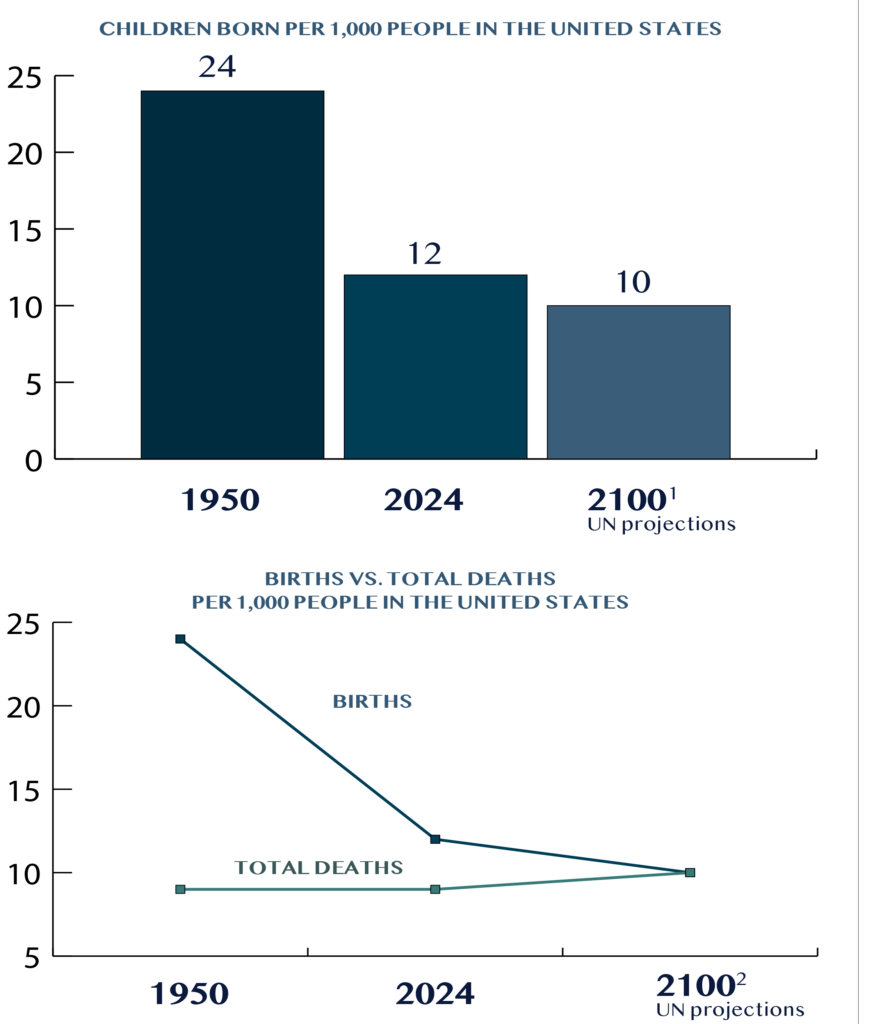
In 1950 there were 24 children born per 1,000 people in the United States. In 2024 that number is 12 children per 1,000 people. According to UN projections that number will be 10 children per thousand by the year 2100. In 1950 about 9 people per thousand died in America and that number is about the same in 2024. It is projected to increase to 10 people per thousand by the year 2100. So, the trendlines are clear. Fewer children are being born now and still fewer children will be born in the future. People will keep dying at about the same rate. There is nothing on the charts or projections that show a trend toward sustaining current U.S. population levels through childbirth.
Losing over one million children per year to abortion is a significant contributing factor to the depopulation crisis in the United States. There are other contributing factors as well including the decline in rates of marriage, delaying children until later in life and choosing to have fewer or no children. All these decisions contribute to the depopulation crisis that is being experienced by countries around the globe. This crisis carries with it a slow but rising tide of consequences as national populations age without young people to replace the old.